The Biggest Fragrance Trends Of 2026
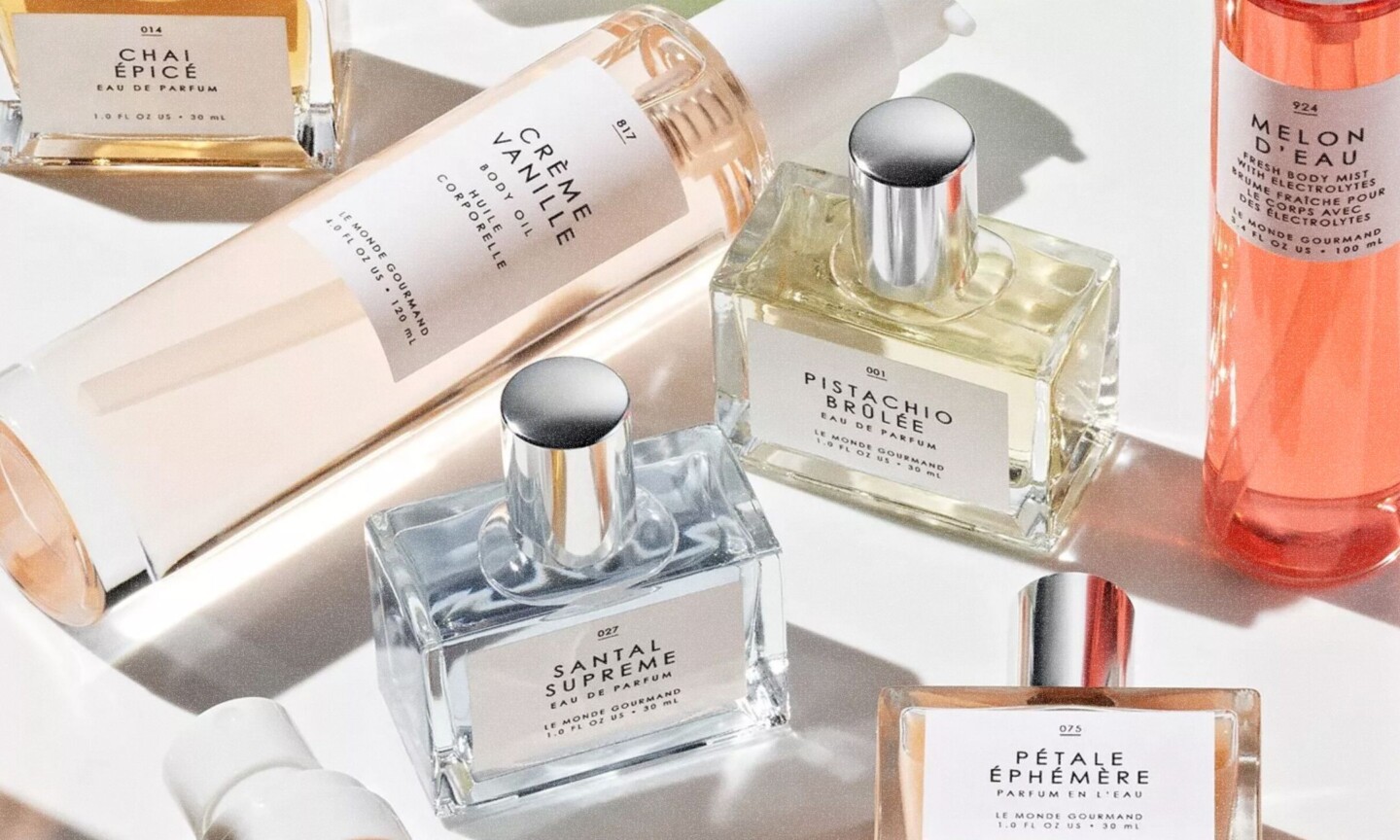
Last year was defined by the revival of nostalgia notes — think syrupy vanilla, heavy ouds, and the unexpected rise of the bedtime scent. But as we head into 2026, the fragrance landscape is becoming infinitely more nuanced. While we’re still craving comfort, the new mood is less about smelling like a literal dessert and more about an intentional and sometimes biotech-driven approach to how we wear scent.
From the acceleration of functional fragrances designed to help you hack your headspace to the rise of boozy, after-dark accords, we spoke to industry experts to uncover the shifts redefining fragrance in 2026.
Grown-Up Gourmands
Gourmand fragrances aren’t going anywhere, but they are growing up. For Yvan Jacqueline, President of Americas at Perfumes de Marly and Initio Parfums Privés, this evolution reflects a growing desire for comfort and indulgence, balanced with refinement rather than excess. “Gourmand has evolved well beyond overt sweetness into something more nuanced and layered,” he says.
“Vanilla, nutty nuances and creamy woods remain very present, but they are treated with greater restraint, playing with light and shade rather than excess,” adds Nadia Benaisa, founder of Les Sœurs de Noé. “The new gourmand is less about ‘tasting’ and more about ‘feeling’.”
For Benaisa, the category is shifting away from seduction towards intimacy. Modern gourmands are now defined by texture and memory, with soft, enveloping accords offset by airy musks, subtle spice, or mineral facets to keep compositions wearable and deeply personal.
Functional Fragrance
One of the defining developments in fragrance is how it’s being used — not simply to smell good, but to support wellbeing. “There is a profound shift: people seek fragrance with purpose,” says Jacqueline. “They are curious about neuroscience, functional effects, and how scent can actively shape their day.”
Functional fragrance is an evolution of something scent has done for millennia — influencing mood. Biochemist and This Works founder Dr Anna Persaud describes functional fragrance as scent formulated with intention, designed to interact with the body’s emotional and stress-response systems. Because smell has a direct, unfiltered line to the brain’s limbic system, its effects can be felt almost immediately, making it uniquely suited to supporting calm, focus, or emotional balance.
Jules Miller, CEO of The Nue Co., sees the rise of functional fragrance as a response to modern overstimulation. “I think people are looking for ways to feel grounded in an increasingly overstimulated and uncertain world,” she explains. “We’re living in a moment of constant input — digital, emotional, environmental — and scent is one of the fastest, most intuitive ways to access a sense of emotional regulation.” As wellness and fragrance continue to converge, she notes that we are increasingly using scent not for identity alone, but as a tactical tool to calm the nervous system, feel more focused, or create a sense of comfort and connection.
Boozy Notes
After years dominated by clean, minimalist compositions, opulence is making a comeback — and it’s arriving via the liquor cabinet.
“Boozy notes such as rum, cognac, and whiskey bring warmth and depth to a fragrance,” says Jacqueline. “They often evoke evening moments, intimacy, and a touch of elegance, adding richness and sensuality to compositions.”
For Charbel Asmar, CEO of M.Micallef, boozy fragrances represent a form of liquid luxury. “Boozy notes capture the vibe of a private members’ club or a candlelit jazz bar; they suggest status, mystery, and a certain joie de vivre.” But he is keen to stress that this isn’t about the sharp, industrial sting of raw alcohol. Instead, these compositions are designed to ‘capture the soul’ of a fine spirit — think the oak-aged warmth of a vintage cognac, the spicy, golden sweetness of dark rum, or the botanical crispness of a perfectly mixed gin and tonic.
Asmar attributes the trend’s acceleration to three factors: a renewed appetite for indulgence; the cocooning comfort these notes provide when paired with vanilla, tobacco, or spice; and their ability to merge traditionally masculine and feminine profiles with ease.
Bold Compositions
Bold fragrances are back, but this time they are far more considered. The focus now is on compositions that feel assured and distinctive: emotionally grounded scents that command a room without ever having to overwhelm it.
“There is a renewed appetite for assertive fragrances with strong character,” says Jacqueline, pointing to the return of oud, spicy ambers, intense woods, and modern gourmands.
However, bold no longer means aggressive. As Benaisa explains, power in fragrance has become more nuanced. “When I think about bold scents in 2026, I don’t think ‘louder’, I think ‘truer’,” she says. Deep woods, resins, leather, and mineral notes are now softened with florals, musks, or airy accords. The result is a scent that holds presence without overpowering its wearer. As Benaisa puts it, “a bold fragrance should walk into the room with you, not before you.”
That balance is also expanding the palette of what qualifies as bold. According to Ann Somma, Chief Brand Officer at Tru Fragrance & Beauty, the growing acceptance of intense notes like oud has opened the door to richer profiles such as chocolate and cacao — notes that can move between creamy, piquant, and enveloping, delivering intensity while remaining surprisingly wearable.
Second-Skin Scents
While much of the olfactive conversation for the year ahead centres on impact and intensity, the rise of ‘second-skin’ scents offers a quieter counterpoint. These fragrances are designed to sit close to the body, accentuating the skin’s natural scent rather than masking it, aligning with a broader cultural shift toward intimacy and personal comfort. It is less about making an entrance and more about creating a private, sensorial cocoon.
“Second-skin fragrances speak to intimacy,” says Jacqueline. “They sit close to the body, often built around musks, soft woods, suede, or skin-like accords. They resonate because they feel personal, enhancing the wearer rather than loudly announcing themselves.”
Wellness-driven simplicity is also part of the appeal. “Second-skin scents that allow the wearer to feel fresh and clean without overpowering those around them make so much sense in our era of wellness,” says Somma. For her, the trend reflects how fragrance is increasingly integrated into daily rituals — from post-shower routines to workouts and mindfulness moments, where overpowering scent can feel out of place or even inappropriate.
All products featured on this page have been hand-picked by our editorial team. However, we may earn a commission on some items. If you purchase something through a link on our site, BeautyNewsDaily may earn an affiliate commission.