An Expert’s Guide to PDRN
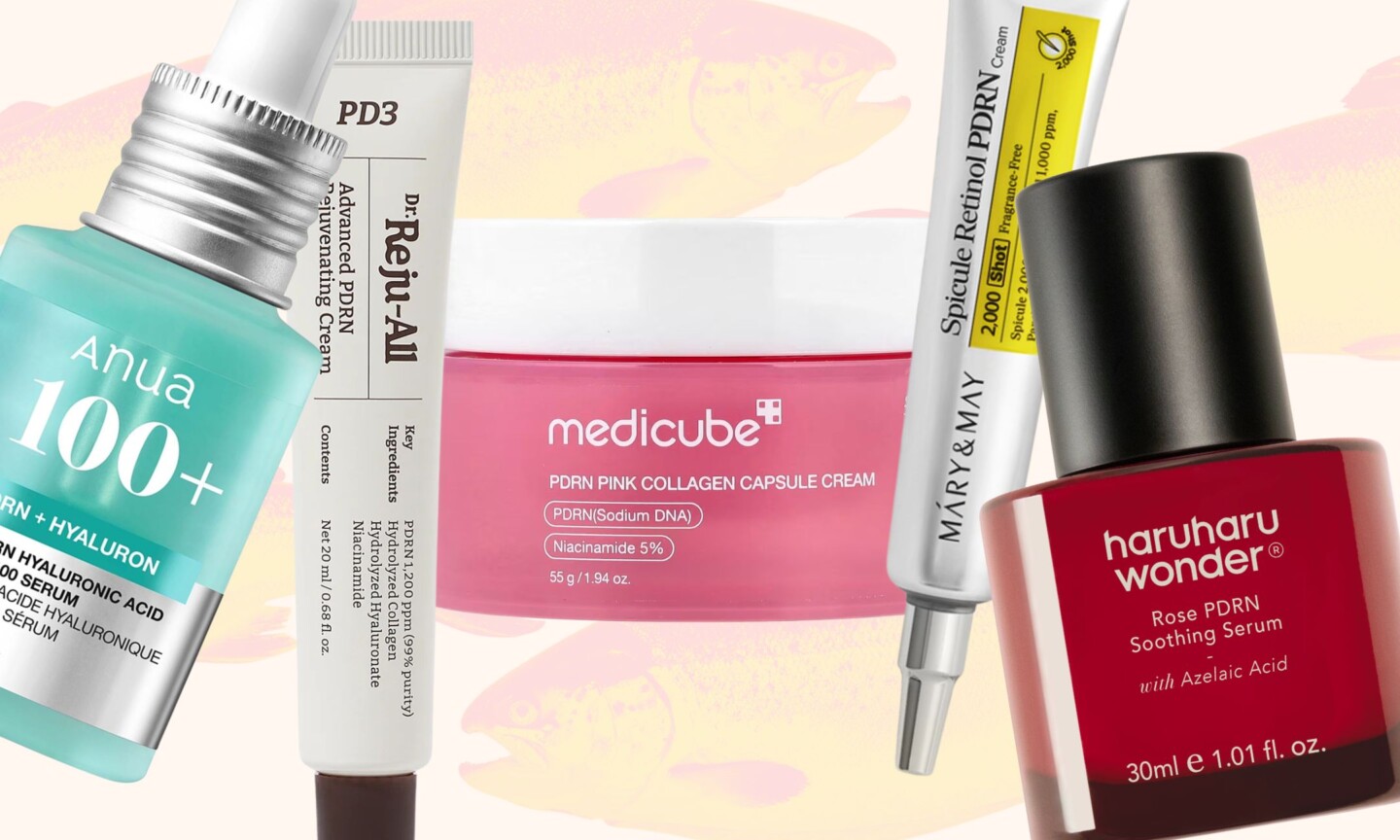
If you’ve noticed PDRN popping up in serums, masks, and post-treatment recovery kits lately, it’s for good reason. Once exclusive to aesthetic clinics, this regenerative ingredient has now crossed over into mainstream skincare — and beauty insiders are calling it the next big thing in skin repair.
It’s frequently dubbed ‘salmon sperm’ (more on that in a second), but the real story is less about novelty and more about how it works beneath the surface.
To unpack exactly what PDRN is — and why it’s suddenly everywhere — we spoke to Kimberley Medd, Clinic Lead at Face the Future.
What is PDRN?
“PDRN stands for polydeoxyribonucleotide. It is a DNA-derived ingredient that acts as a regenerative molecule, supporting skin tissue repair and renewal at a cellular level,” says Medd. “PDRN has been used for years in injectable regenerative treatments, but we’re now seeing it increasingly formulated into topical skincare.”
In simple terms, PDRN is made up of nucleotides — the building blocks of DNA that help drive cellular repair. This means that rather than just prompting the skin to behave differently, PDRN supports the biological processes involved in rebuilding tissue.
Traditionally, PDRN has been sourced from salmon or trout sperm because DNA fragments from these sources are well tolerated by human skin. As demand grows, alternative sources — including plant-derived and synthetic DNA fragments — are also being explored.
“Other sources are also being researched as vegan alternatives, including plants like ginseng, aloe, broccoli, and red algae,” she says. “It’s worth noting that not all plant-derived or vegan products labelled as PDRN actually contain true polydeoxyribonucleotide fragments in the strict scientific sense.”
That distinction matters — because while the regenerative concept may be similar, not every product marketed under the PDRN umbrella delivers the same DNA-fragment technology used in clinical settings.
Why is PDRN taking over skincare right now?
Unlike actives that work by exfoliating, resurfacing, or stimulating, PDRN is all about regeneration.
“What makes it exciting is that it doesn’t just treat surface concerns; it encourages the skin to function in a healthier, more resilient way,” she explains. “It works by stimulating cellular repair and encouraging fibroblast activity — the cells responsible for producing collagen and elastin.”
That fibroblast stimulation matters because collagen and elastin are what keep skin firm, bouncy, and smooth. Over time, boosting that internal support can translate to visibly denser, more elastic skin.
“It also has anti-inflammatory properties, meaning it can help calm redness, support healing after procedures, and strengthen compromised skin barriers,” she says. “Over time, skin tends to look smoother, firmer, and more luminous because you’re improving the quality of the tissue itself, not just creating a temporary plumped-skin effect.”
Translation: this is less about achieving instant glass skin and more about that long-game glow.
Who should be using PDRN?
The beauty of PDRN is that it isn’t aggressive — so it suits more skin types than you might expect.
“It’s an incredibly versatile ingredient because it supports regeneration without being exfoliating or aggressive,” she says. “It’s particularly beneficial for mature or menopausal skin experiencing collagen decline, sensitive or inflamed skin in need of accelerated repair, dull, thin, or crepey complexions, and skin recovering from procedures.”
If your skin barrier is feeling fragile, your texture is thinning, or you’re navigating hormonal shifts, it slots in as a support system rather than a stressor.
How does PDRN compare to collagen-boosting peptides?
“Peptides encourage the skin to produce more collagen, acting as a messenger. However, PDRN is different because it provides nucleotides, which are the building blocks needed for cellular repair. Rather than simply sending a signal, it supports the actual regeneration process at a deeper biological level.”
Think of peptides as the text message telling your skin to get to work. PDRN supplies some of the materials needed to do the job.
Is topical PDRN as effective as injectable treatments?
While both forms use the same active molecule, polydeoxyribonucleotide, how they behave in the skin is markedly different.
“While topical PDRN and injectable PDRN both harness the same active molecule, they act differently,” Medd explains. “When PDRN is injected, it is delivered beneath the skin’s surface — often into the dermis or subcutaneous tissue — so that it can interact directly with fibroblasts and growth factor pathways.”
Because injectables bypass the skin barrier entirely, they are able to work at the depth where structural change happens.
Topical formulas, on the other hand, are designed to support the skin from the surface down. Rather than driving dramatic structural regeneration, they focus on improving overall skin quality over time.
“So while injectable PDRN is used for structural regeneration, topical PDRN is great for ongoing skin health and gentle regeneration,” she adds. “It offers more surface repair and is still beneficial to overall skin quality, but in a less invasive way, meaning its effects are more subtle.”
In practical terms, injectable PDRN is corrective, delivering more dramatic and clinically measurable results, while topical PDRN is supportive and better suited to maintenance, barrier support, and gradual improvements in skin quality.
Can you use PDRN with retinol, vitamin C, and acids?
Yes — and that’s part of the appeal.
“PDRN pairs well with active ingredients to support skin health alongside transformation,” she explains. “With retinoids, it can help offset irritation and support barrier recovery; with vitamin C, it supports antioxidant protection and enhances repair; and with AHAs, it can help soothe post-exfoliation sensitivity and reinforce skin resilience.”
In a routine stacked with high-performance actives, it works like a built-in recovery phase.
Is PDRN safe for every skin type?
Topically, PDRN is considered very well tolerated.
“It’s one of the more biocompatible regenerative ingredients we have, which is why it’s gained such strong traction in both clinical and cosmetic settings,” she says.
That said, she notes there is “always a small risk of sensitivity, especially for those with known fish allergies, as it’s commonly derived from salmon DNA.”
Which PDRN skincare products are worth the investment?
From glow-boosting serums to barrier-supporting creams, PDRN is now showing up across a range of formulas. Read on for our edit of the best PDRN products to add to your routine.
Medicube PDRN Pink Collagen Capsule Cream
Medicube’s glossy pink formula pairs collagen capsules with marine-derived PDRN to boost bounce and hydration while leaving skin looking fresh and radiant. The result is a plump, glassy finish.
Dr. Reju-All Advanced PDRN Rejuvenating Cream
This PDRN cream has built a loyal following in Korean pharmacies for good reason. The formula centres around 1,200 ppm of PDRN, supported by niacinamide, panthenol, collagen, and hyaluronic acid to soothe and hydrate stressed skin. Lightweight but hardworking, it leaves the complexion smoother, calmer, and more resilient.
Anua PDRN Hyaluronic Acid Capsule 100 Serum
Anua’s famous capsule serum is all about glow and hydration. The lightweight formula combines PDRN with 3% hyaluronic acid and collagen, while encapsulation technology helps keep skin plump and dewy for longer. Expect the smooth, glassy radiance K-beauty routines are famous for.
Genabelle PDRN Rejuvenating Mask
Think of this as a quick reset for tired or irritated skin. Genabelle’s sheet mask saturates the complexion with 4,000 ppm of PDRN, supported by the brand’s HTD-Genacomplex — a blend of additional PDRN, three forms of hyaluronic acid, and tripeptide-1 designed to hydrate and support skin repair. Peach flower extract and damask rose water further help calm and brighten stressed complexions.
Mary&May Spicule Retinol PDRN Cream
This treatment cream pairs retinol with a centella asiatica-derived PDRN complex to support renewal while softening fine lines and refining texture. Tiny marine spicules help deliver the actives more effectively, leaving skin smoother and more even over time.
Dr. Althea PDRN Reju 5000 Cream
Dr. Althea’s newest moisturiser blends 5,000 ppm of probiotic-fermented vegan PDRN with centella leaf water, panthenol, and EGF to support recovery and elasticity. It leaves skin calm, hydrated, and glowing — ideal for overworked or compromised complexions.
Haruharu Wonder Rose PDRN Soothing Serum
For a gentler take on the PDRN trend, Haruharu Wonder’s Rose PDRN Soothing Serum combines PDRN with azelaic acid, squalane, and panthenol to calm the skin and reduce redness while restoring hydration and balance. Lightweight and soothing, it’s a safe bet for those with sensitive or easily irritated skin.
Mixsoon PDRN Collagen Eye Serum
Mixsoon’s eye serum brings PDRN to the under-eye area. Using rice-derived PDRN alongside peptides, hyaluronic acid, and collagen, the lightweight formula helps smooth fine lines while delivering long-lasting hydration. Fermented rice is also included to provide a subtle brightening effect, leaving tired under-eyes looking fresher and a little more awake.
All products featured on this page have been hand-picked by our editorial team. However, we may earn a commission on some items. If you purchase something through a link on our site, BeautyNewsDaily may earn an affiliate commission.